

Atopic Dermatitis Market to Reach USD 12.97 Billion by 2034, Growing at 7.75% CAGR
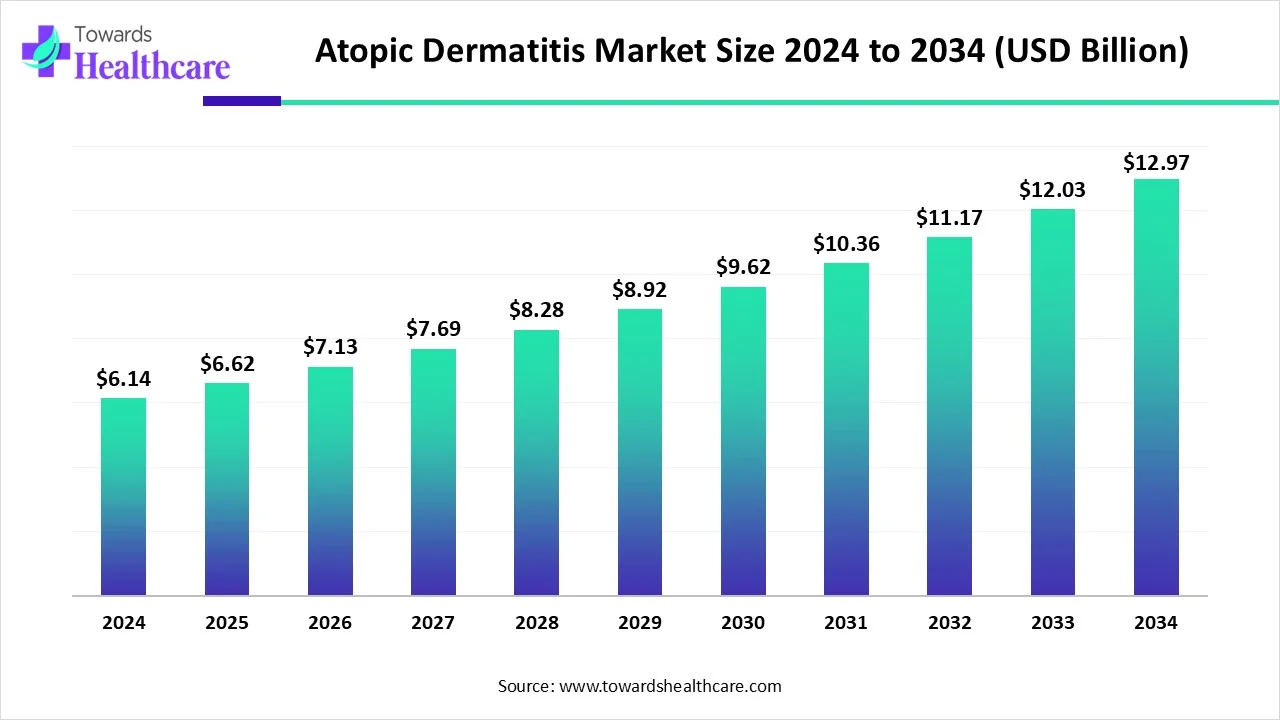
The global atopic dermatitis market size was valued at USD 6.62 billion in 2025 and is predicted to hit around USD 12.97 billion by 2034, rising at a 7.75% CAGR, a study published by Towards Healthcare a sister firm of Precedence Research.
Ottawa, Jan. 27, 2026 (GLOBE NEWSWIRE) -- The global atopic dermatitis market size is calculated at USD 7.13 billion in 2026 and is expected to reach around USD 12.97 billion by 2034, growing at a CAGR of 7.75% for the forecasted period.
The Complete Study is Now Available for Immediate Access | Download the Sample Pages of this Report @ https://www.towardshealthcare.com/download-sample/5599
Key Takeaways
- North America registered dominance in the atopic dermatitis market in 2024.
- Europe is expected to witness notable expansion in the studied years.
- By type, the chronic atopic dermatitis segment accounted for a major share of the market in 2024.
- By type, the acute atopic dermatitis segment is expected to grow at a lucrative CAGR during 2025-2034.
- By treatment type, the topical corticosteroids segment was dominant in the market in 2024.
- By treatment type, the biologics segment is expected to witness rapid expansion in the upcoming years.
- By administration type, the topical segment registered dominance in the atopic dermatitis market in 2024.
- By administration type, the systemic segment is expected to grow notably in the predicted timeframe.
- By severity, the severe segment held the largest revenue share of the market in 2024.
- By severity, the mild segment is expected to witness significant growth during 2025-2034.
What are the Major Growth Factors Involved in Atopic Dermatitis?
The atopic dermatitis market refers to a chronic inflammatory skin condition, which leads to intense itchy, dry, red, and scaly skin. These cases are fostering demand for advanced therapies, and the overall market has several substantial growth factors, such as a huge patient pool, novel targeted therapies, robust diagnostics, & emphasis on topical formulations, digital health, and planned alliances. Currently, the globe is focusing on steroid-free management and skin colour studies for greater effectiveness.
What are the Significant Drivers in the Atopic Dermatitis Market?
The global market is propelled by widening awareness regarding atopic dermatitis among patients and healthcare professionals, which promotes more diagnoses and greater demand for extensive solutions. Nowadays, the leading firms are bolstering the launch of new drugs, especially biologics, like Dupixent, and JAK inhibitors, which facilitate efficiency and targeted treatments.
Get the latest insights on life science industry segmentation with our Annual Membership: https://www.towardshealthcare.com/get-an-annual-membership
What are the Key Drifts in the Atopic Dermatitis Market?
- In November 2025, TIRmed Pharma joined with Bachem for process development and production of TIR-01, the active pharmaceutical ingredient in TIRmed’s new therapy for atopic dermatitis.
- In September 2025, KBI Biopharma, Inc. and Infinimmune, Inc. allied to foster the manufacturing of the human monoclonal antibody (“IFX-101”) program, which targets atopic dermatitis.
-
In February 2024, Pfizer and Mumbai-based Glenmark Pharmaceuticals partnered to roll out abrocitinib, a first-of-its-kind oral advanced systemic treatment for moderate‐to‐severe atopic dermatitis, in India.
What is the Vital Limitation in the Atopic Dermatitis Market?
The market is facing increased treatment spending, which restricts patient access, and there are some safety issues/side effects with corticosteroids and novel systemic drugs, which create complications with treatment adherence.
Regional Analysis
How did North America Dominate the Market in 2024?
In 2024, North America captured the dominating share of the market due to the possession of strong medical systems that offer access to novel therapies. Alongside, the regional firms are bolstering investments and innovations in R&D, which results in new drug pipelines, like JAK inhibitors, PDE4 inhibitors, and earlier FDA clearance for innovative interventions. Recently, the American Academy of Dermatology advanced its guidelines to encompass these new therapies, & extensively recommended new topicals, like tapinarof, roflumilast, and biologics, such as lebrikizumab, nemolizumab, in severe issues.
In the U.S., the atopic dermatitis market continues to expand due to strong adoption of advanced biologic therapies, broad insurance reimbursement, and increasing clinical treatment options. Growth is supported by a large patient base and ongoing drug approvals, fueling steady demand across age groups.
Why Europe Expanded Significantly in the Atopic Dermatitis Market in 2024?
During the prospective period, Europe is predicted to witness lucrative expansion. The region is widely promoting awareness about new treatments through patient education, like World Atopic Eczema Day and physician recognition. However, TREATgermany registry shows continuous, large-scale data analysis, i.e., 2,000+ patients on the real-world efficacy of therapies, such as dupilumab. Meanwhile, the UK is stepping towards advances in skin dysbiosis, which results in the progression of microbiotic-based therapies.
In China, the atopic dermatitis market is growing rapidly with rising disease awareness, expanding healthcare infrastructure, and greater access to innovative therapeutics. Urban healthcare improvements and increased clinical trials are accelerating treatment availability and encouraging wider patient diagnosis and care.
You can place an order or ask any questions, please feel free to contact us at sales@towardshealthcare.com
Segmental Insights
By type analysis
Why did the Chronic Atopic Dermatitis Segment Lead the Market in 2024?
The chronic atopic dermatitis segment dominated with the largest share of the market. Across the world, approximately 204 million people had this concern. For these accelerating cases, the market is shifting from corticosteroids and calcineurin inhibitors to biologics and JAK inhibitors for moderate-to-severe instances. An immersive product, like Vtama Cream 1%, received FDA approval as a non-steroidal aryl hydrocarbon receptor agonist for restoring the skin barrier among adults and children aged 2 and older.
The acute atopic dermatitis segment is estimated to register notable growth. As per the survey, nearly 10–20% of children across the world are affected by acute atopic dermatitis. Drivers, like a combination of genetics, immune system dysfunction, and environmental factors, such as irritants, allergens, etc., may lead to these cases. Patients prefer those candidates that can lower itch within hours to days, breaking the acute scratch-itch cycle quicker than conventional solutions.
By treatment type analysis
Which Treatment type dominated the Atopic Dermatitis Market in 2024?
In 2024, the topical corticosteroids segment held the biggest share of the market. They are first-line treatments, with greater convenience and cost-effectiveness, and also bolster innovations in formulations, such as creams, ointments, patches, and foams. The latest development includes Nemolizumab (Nemluvio), which is the first inhibitor of IL-31 used in combination with topical corticosteroids or TCIs for moderate-to-severe AD.
On the other hand, the biologics segment will expand rapidly. These treatments mainly target specific inflammatory pathways, i.e., IL-4, IL-13, and IL-31, and offer rigorous control of inflammation and itch in severe AD as compared to older therapies. The leading firms are widening the adoption of these biologics in pediatric use. Tralokinumab-ldrm (Adbry), an IL-13 inhibitor, acquired authorisation for pediatric patients (12-17 years) in the U.S.
By administration type analysis
Which Administration Led the Atopic Dermatitis Market in 2024?
The topical segment captured a major revenue share of the market in 2024. Topical administration offers easy application, with greater cost-effectiveness, and increased effects in lowering inflammation, redness, and itching (pruritus). Continuous adoption of non-steroidal topicals or intermittent steroid use on susceptible areas can mitigate flares from arising, keeping skin calmer for longer.
Besides this, the systemic segment will expand significantly. This mainly acts on the immune system to highlight the underlying inflammation. Also, this assists in lowering systemic inflammation and supports stopping the growth of the atopic march. Whereas, the OX40 inhibitors, like Rocatinlimab & Amlitelimab, are under development, late-stage trials, and target the OX40 ligand to rebalance T-cell activity.
By severity analysis
How did the Severe Segment Dominate the Market in 2024?
In 2024, the severe segment registered dominance with a major share of the atopic dermatitis market. This occurs due to the expanding pollution, urbanization, stress, and genetics. The globe is shifting towards biologics, small molecules, and combination therapies targeting diverse disease mechanisms, especially IL-4/13 and PDE-4. In this case, one can use prescribed topical solutions, or JAK inhibitors, and advanced phototherapy.
Moreover, the mild segment is estimated to expand considerably. Major urbanization and environmental changes are leading to mild atopic dermatitis. This can be prevented by using moisturiser consistently, with gentle skin care. As well as, mild AD can be mitigated by employing over-the-counter hydrocortisone or prescription topical anti-inflammatory creams. Moreover, Roflumilast, Tapinarof, and Topical Calcineurin Inhibitors are used for proactive maintenance.
Become a valued research partner with us - https://www.towardshealthcare.com/schedule-meeting
What are the Revolutionary Developments in the Atopic Dermatitis Market?
- In December 2025, Elanco Animal Health Incorporated received the USDA approval for Befrena (tirnovetmab), a novel anti-IL31 monoclonal antibody (mAb) injection targeting canine allergic and atopic dermatitis.
- In July 2025, LEO Pharma received U.S. FDA approvals for ANZUPGO (delgocitinib) cream (20 mg/g) for the topical treatment of moderate-to-severe chronic hand eczema (CHE) in adults.
- In June 2025, Aclaris Therapeutics, Inc. initiated a Phase 2 trial for its investigational drug bosakitug (ATI-045), which targets moderate-to-severe atopic dermatitis (AD).
Atopic Dermatitis Market Key Players List
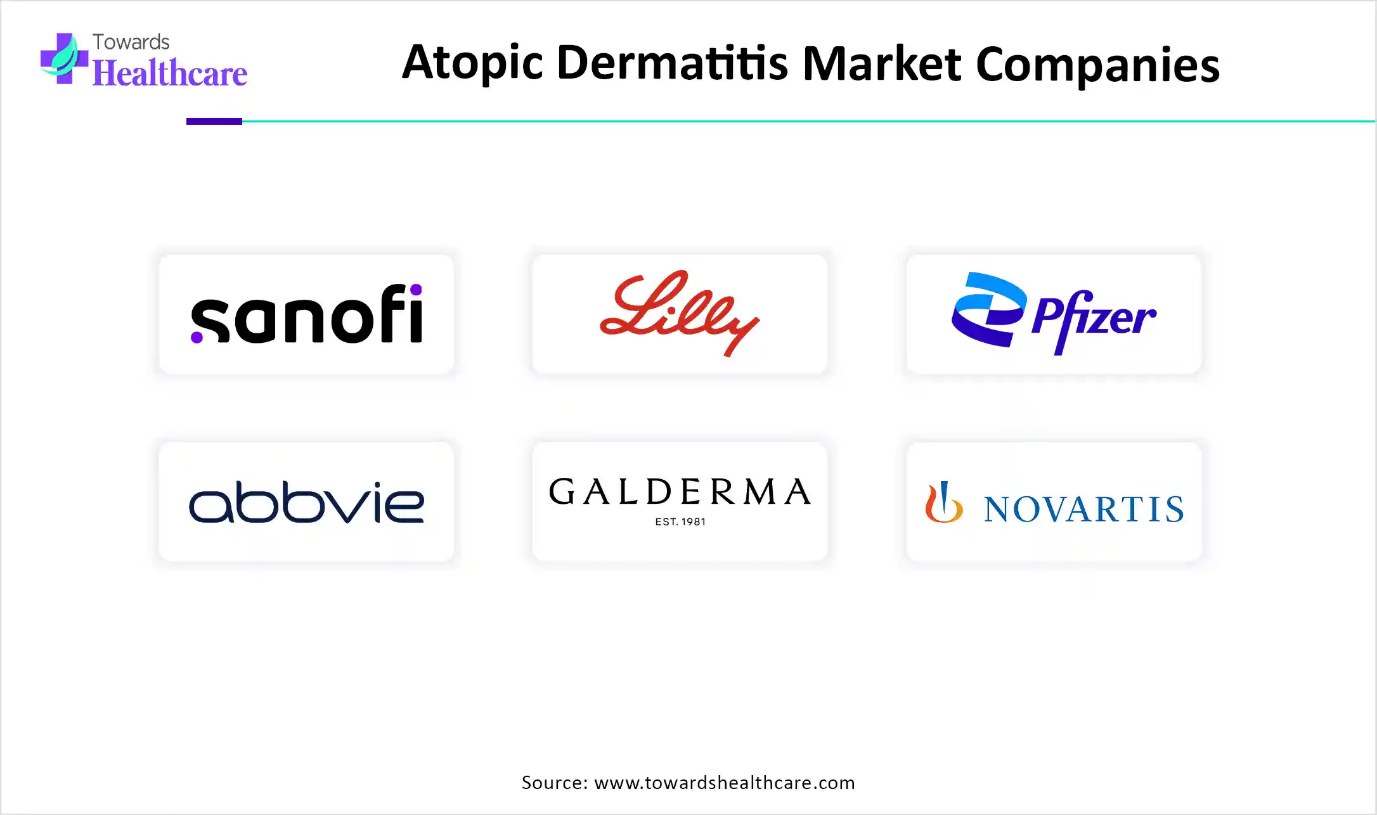
- Sanofi
- Eli Lilly
- Pfizer
- AbbVie
- Galderma
- Novartis
- Dermira
- UCB
- Boehringer Ingelheim
- Almirall
- GSK
- Amgen
- Regeneron Pharmaceuticals
- Mylan
- AstraZeneca
Browse More Insights of Towards Healthcare:
The global atopic drugs market is on an upward trajectory, poised to generate substantial revenue growth, potentially climbing into the hundreds of millions over the forecast years from 2025 to 2034.
The global acne drugs market size was estimated at USD 10.24 billion in 2025 and is predicted to increase from USD 10.78 billion in 2026 to approximately USD 17.07 billion by 2035, expanding at a CAGR of 5.24% from 2026 to 2035.
The global herbal supplement for mental health market size is calculated at USD 15.04 billion in 2025, grew to USD 16.1 billion in 2026, and is projected to reach around USD 29.7 billion by 2035. The market is expanding at a CAGR of 7.04% between 2026 and 2035.
The next-gen delivery market is rapidly advancing on a global scale, with expectations of accumulating hundreds of millions in revenue between 2026 and 2035.
The global genitourinary drugs market size was estimated at USD 30.1 billion in 2025 and is predicted to increase from USD 30.45 billion in 2026 to approximately USD 33.75 billion by 2035, expanding at a CAGR of 1.15% from 2026 to 2035.
The global PRP and stem cell alopecia treatment market size was estimated at USD 489.27 million in 2025 and is predicted to increase from USD 515.93 million in 2026 to approximately USD 831.79 million by 2035, expanding at a CAGR of 5.45% from 2026 to 2035.
The global antiviral drugs market size was estimated at USD 62.85 billion in 2025 and is predicted to increase from USD 65.13 billion in 2026 to approximately USD 89.86 billion by 2035, expanding at a CAGR of 3.64% from 2026 to 2035.
The global circadian rhythm sleep disorder market size is calculated at US$ 2.48 billion in 2025, grew to US$ 2.65 billion in 2026, and is projected to reach around US$ 4.69 billion by 2035. The market is expanding at a CAGR of 6.56% between 2026 and 2035.
The placental stem global cell therapy for neurological disorders market size is calculated at US$ 535.65 million in 2025, grew to US$ 632.81 million in 2026, and is projected to reach around US$ 2836.93 million by 2035. The market is expanding at a CAGR of 18.14% between 2026 and 2035.
The global intranasal corticosteroids market size is calculated at US$ 7.57 billion in 2025, grew to US$ 7.94 billion in 2025, and is projected to reach around US$ 12.14 billion by 2035. The market is expanding at a CAGR of 4.84% between 2026 and 2035.
Segments Covered in the Report
By Type
- Chronic Atopic Dermatitis
- Acute Atopic Dermatitis
- Adult Atopic Dermatitis
- Pediatric Atopic Dermatitis
By Treatment Type
- Topical Corticosteroids
- Topical Calcineurin Inhibitors
- Biologics
- Antihistamines
By Route of Administration
- Topical
- Systemic
- Injectable
By Severity
- Mild
- Moderate
- Severe
By Region
- North America
- U.S.
- Canada
- Asia Pacific
- China
- Japan
- India
- South Korea
- Thailand
- Europe
- Germany
- UK
- France
- Italy
- Spain
- Sweden
- Denmark
- Norway
- Latin America
- Brazil Mexico
- Argentina
- Middle East and Africa (MEA)
- South Africa
- UAE
- Saudi Arabia
- Kuwait
Immediate Delivery Available | Buy This Premium Research @ https://www.towardshealthcare.com/checkout/5599
Access our exclusive, data-rich dashboard dedicated to the healthcare market - built specifically for decision-makers, strategists, and industry leaders. The dashboard features comprehensive statistical data, segment-wise market breakdowns, regional performance shares, detailed company profiles, annual updates, and much more. From market sizing to competitive intelligence, this powerful tool is one-stop solution to your gateway.
Access the Dashboard: https://www.towardshealthcare.com/access-dashboard
About Us
Towards Healthcare is a leading global provider of technological solutions, clinical research services, and advanced analytics, with a strong emphasis on life science research. Dedicated to advancing innovation in the life sciences sector, we build strategic partnerships that generate actionable insights and transformative breakthroughs. As a global strategy consulting firm, we empower life science leaders to gain a competitive edge, drive research excellence, and accelerate sustainable growth.
You can place an order or ask any questions, please feel free to contact us at sales@towardshealthcare.com
Europe Region: +44 778 256 0738
North America Region: +1 8044 4193 44
APAC Region: +91 9356 9282 04
Web: https://www.towardshealthcare.com
Our Trusted Data Partners
Precedence Research | Towards Packaging | Towards Food and Beverages | Towards Chemical and Materials | Towards Dental | Towards EV Solutions | Healthcare Webwire
Find us on social platforms: LinkedIn | Twitter | Instagram | Medium | Pinterest


Legal Disclaimer:
EIN Presswire provides this news content "as is" without warranty of any kind. We do not accept any responsibility or liability for the accuracy, content, images, videos, licenses, completeness, legality, or reliability of the information contained in this article. If you have any complaints or copyright issues related to this article, kindly contact the author above.
