

Advanced Science|HEXB Induces Cerebral EndMT to Confer Anti-Angiogenic Resistance in Glioblastoma
News originally published by
EIN Presswire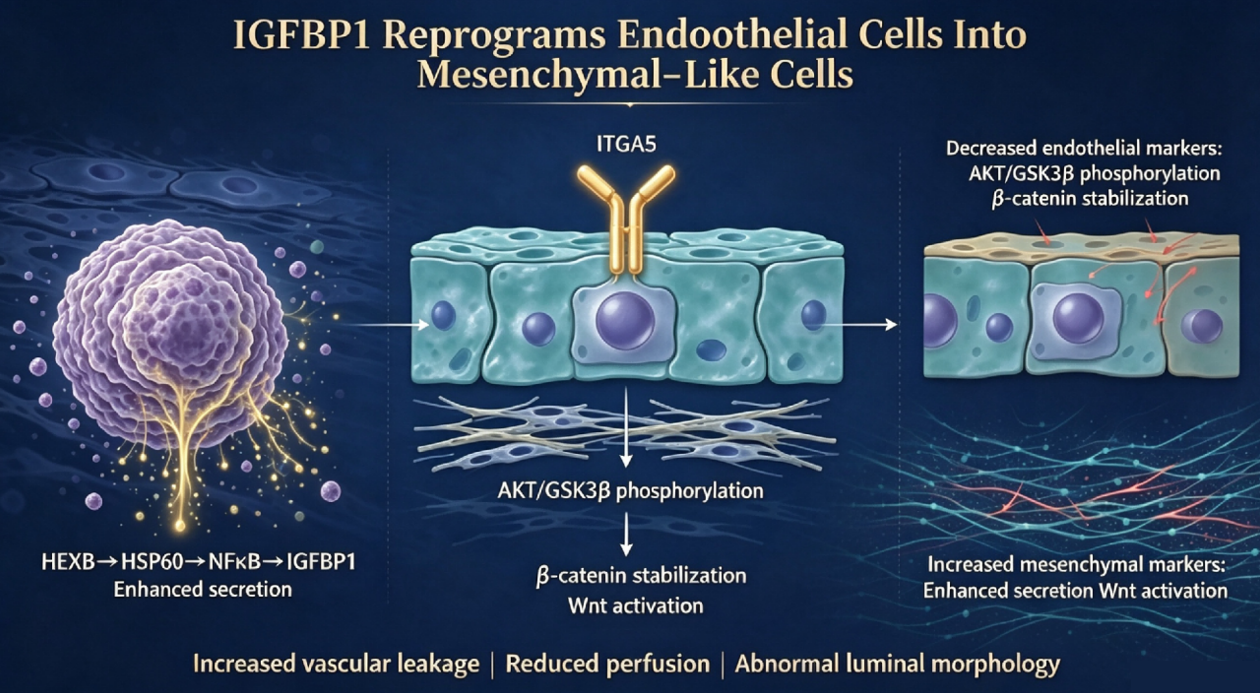
A complete druggable molecular cascade uncovers the mechanism of bevacizumab resistance in glioblastoma
HUSTON, TX, UNITED STATES, November 16, 2026 /EINPresswire.com/ -- Bevacizumab and other anti-VEGF therapeutics deliver temporary radiological improvements and reduce peritumoral edema for patients diagnosed with glioblastoma (GBM). Nevertheless, acquired resistance severely constrains clinical benefit and prevents meaningful overall-survival gains. Published in Advanced Science, this study unravels a previously under-recognized mechanism: tumour-produced HEXB rewires brain endothelial cells toward a mesenchymal phenotype via paracrine IGFBP1 signalling. Secreted IGFBP1 concentrations were precisely quantified with the Cloud-Clone IGFBP1 ELISA kit, furnishing critical quantitative proof for this resistance-driving cascade.
GBM ranks as the most common and aggressive primary malignant brain tumour, distinguished by extensive pathological microvascular proliferation. Cutting off tumour blood supply has long been a core therapeutic strategy. After anti-VEGF treatment prunes tumour vessels, malignant cells rapidly activate alternative VEGF-independent perfusion pathways to achieve therapeutic escape, termed acquired anti-angiogenic resistance.
Endothelial plasticity through endothelial-to-mesenchymal transition (Endo-MT) is central to this resistance. Cerebral endothelial cells lose tight junctions and canonical endothelial markers including VEGFR2 and VE-cadherin while acquiring mesenchymal signatures such as N-cadherin and S100A4. The resultant vasculature becomes unstable, leaky and poorly perfused. This explains the well-known clinical paradox: radiological edema reduction does not improve intratumoural oxygen supply but instead fuels tumour invasiveness. Prior studies could not fully define the tumour-intrinsic genes and downstream signalling networks responsible for this intercellular crosstalk.
Figure IGFBP1 Reprograms Endothelial Cells into Mesenchymal-Like Cells
HEXB (hexosaminidase B) is a lysosomal hydrolase capable of secretion, whose roles within the glioma-vascular microenvironment remained poorly characterized. Researchers deployed a Sleeping-Beauty transposon-driven spontaneous GBM mouse model that faithfully recapitulated clinical bevacizumab resistance: tumours regressed initially before aggressive regrowth without survival benefit. Single-cell RNA sequencing of CD31⁺ endothelial cells revealed 67.4 % mesenchymal-like endothelial cells in anti-VEGF treated animals versus merely 8.5 % in controls. Pseudotime analysis confirmed dynamic phenotypic shifting from endothelial-like to mesenchymal-like states under therapeutic pressure. Investigators also analysed serial surgical specimens from one patient who underwent three craniotomies. After bevacizumab exposure, mesenchymal-type endothelial cells (CD31⁺S100A4⁺) accumulated drastically while functional endothelial populations (CD31⁺VEGFR2⁺) were nearly eliminated in human tissue samples, mirroring mouse-derived observations.
Four-round bioinformatic screening across multiple clinical datasets identified HEXB out of 4741 candidate genes. Counter-intuitively, HEXB exerts its effect independent of enzymatic activity. Neither Gal-PUGNAc (HEXB enzymatic inhibitor) nor recombinant HEXB protein induced Endo-MT in endothelial cells. Instead, intracellular HEXB functions as a scaffolding protein. Its 200-350 amino-acid domain directly binds the 401-573 amino-acid fragment of HSP60. This physical interaction masks TRIM21-mediated K6-linked ubiquitination and protects HSP60 from lysosomal degradation. Gal-PUGNAc binds the Arg211 residue within the critical binding domain and disrupts HEXB-HSP60 complex formation.
Stabilized HSP60 sustains NF-κB activation and augments IGFBP1 transcription and secretion in glioma stem cells (GSCs). The Cloud-Clone human IGFBP1 ELISA kit (Cat. No. SEA052Hu) was used to quantify IGFBP1 levels within GSC conditioned media, providing solid quantitative evidence for this paracrine signalling axis. Secreted IGFBP1 binds endothelial ITGA5 through its RGD motif, triggering AKT-GSK3β phosphorylation, β-catenin stabilization and Wnt pathway activation. This signalling cascade triggers Endo-MT, down-regulating endothelial markers and up-regulating mesenchymal genes, finally producing leaky blood vessels with reduced perfusion and abnormal luminal structures. Neutralizing IGFBP1 or silencing ITGA5 abrogates Endo-MT phenotypes in vitro.
Pre-clinical animal studies validated therapeutic interventions targeting this pathway. Gal-PUGNAc monotherapy decreased mesenchymal endothelial populations, restored functional vessel markers, improved vascular perfusion and prolonged survival in spontaneous GBM-bearing mice. The combination of Gal-PUGNAc and anti-VEGF-A antibody reversed Endo-MT, normalized vascular architecture, restrained tumour progression and achieved superior survival benefits. Analysis of public clinical datasets demonstrated that GBM patients with high HEXB expression have worse prognosis and diminished bevacizumab responsiveness.
This research establishes a complete, intervenable signalling chain: anti-VEGF stress elevates ZNF311-driven HEXB expression in tumour cells; HEXB stabilizes HSP60 by blocking TRIM21-dependent K6 ubiquitination; persistent NF-κB signalling boosts IGFBP1 paracrine release; IGFBP1-ITGA5 signalling drives Endo-MT and vascular dysfunction, culminating in therapeutic resistance. Blocking this cascade either upstream at the HEXB-HSP60 interface or downstream via IGFBP1 neutralization restores tumour sensitivity to anti-angiogenic treatment.
Several limitations require further investigation. Gal-PUGNAc remains a tool compound; its selectivity, brain penetration and long-term safety profiles need further assessment. Pericytes and astrocytes may also contribute to vascular remodelling alongside Endo-MT. Future work will explore additional HEXB-dependent secreted mediators and evaluate HEXB as a predictive biomarker for bevacizumab resistance among GBM patients.
By uncovering the non-enzymatic scaffolding function of HEXB and its downstream paracrine IGFBP1-driven vascular reprogramming, this work delivers new mechanistic insights into anti-angiogenic resistance in glioblastoma. High-performance immunoassays from Cloud-Clone deliver robust quantification of secreted signalling molecules, which is indispensable for validating paracrine tumour-microenvironment research. The combinatorial therapeutic strategy reported in this study opens promising translational avenues to overcome bevacizumab resistance for people living with glioblastoma.
SuKi Duan
CLOUD-CLONE CORP.WUHAN
Visit us on social media:
LinkedIn
Instagram
TikTok
X
Legal Disclaimer:
EIN Presswire provides this news content "as is" without warranty of any kind. We do not accept any responsibility or liability for the accuracy, content, images, videos, licenses, completeness, legality, or reliability of the information contained in this article. If you have any complaints or copyright issues related to this article, kindly contact the author above.
